 I'm Ella, your AI-powered assistant.

Geistlich

Periodontal Treatment
Periodontitis affects nearly half of the global population, and it’s more than just a dental issue. This chronic inflammatory disease compromises the gums, ligaments, and bone supporting your patients’ teeth, and has been linked to systemic health risks including diabetes, cardiovascular disease, and pregnancy complications.
With Geistlich’s trusted biomaterials, such as Bio-Oss® to maintain volume, Bio-Gide® Perio to stabilize the site, and Mucograft® to promote good healing, clinicians can protect bone structure right from the start.

Peri-implantitis Treatment
Peri-implant disease is an inflammatory condition that affects the soft and hard tissues surrounding dental implants. Mucositis is the early and reversible form of peri-implant disease. It is characterized by inflammation of the soft tissue surrounding the implant without any loss of supporting bone. Peri-implantitis is the more advanced form of peri-implant disease, involving both soft tissue inflammation and progressive loss of the supporting bone around the implant.
For regenerative treatment of peri-implantitis, Geistlich Bio-Oss®, Bio-Oss® Collagen, Bio-Gide®, and Bio-Gide® Perio are recommended to support predictable bone regeneration, membrane stability, and long-term peri-implant tissue health.
Sinus Floor Elevation Treatment
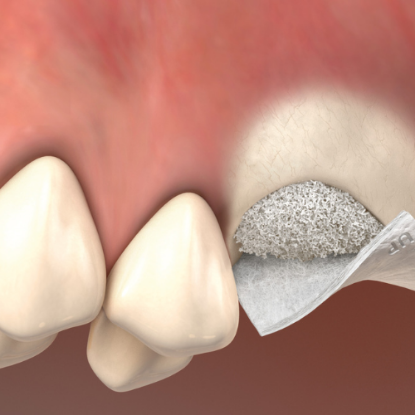
After the loss of premolars or molars, the posterior maxilla often lacks sufficient bone height for implant placement due to sinus pneumatization. Sinus Floor Elevation (SFE) is a regenerative procedure that increases vertical bone volume beneath the sinus membrane, allowing for secure and long-lasting implant placement.
Depending on the remaining bone height and anatomy, the sinus membrane can be elevated using either a crestal (transcrestal) or lateral window approach.
For predictable bone regeneration and long-term implant stability, Geistlich Bio-Oss®, Bio-Oss® Collagen, and Bio-Oss® Pen provide a stable osteoconductive scaffold beneath the elevated sinus membrane, while Geistlich Bio-Gide® protects the grafted site and supports soft-tissue integration.
Welcome to HANSAmed!

Woohoo! You've unlocked a
$10welcome reward point!
Shop now and save within 30 days!